

Why Thinking Skills Matter More Than Marks
Be Brainy Blog 1 Image 1

Why Thinking Skills Matter More Than Marks

Why Cognitive Development Matters in Children:
Learning Beyond Memorisation

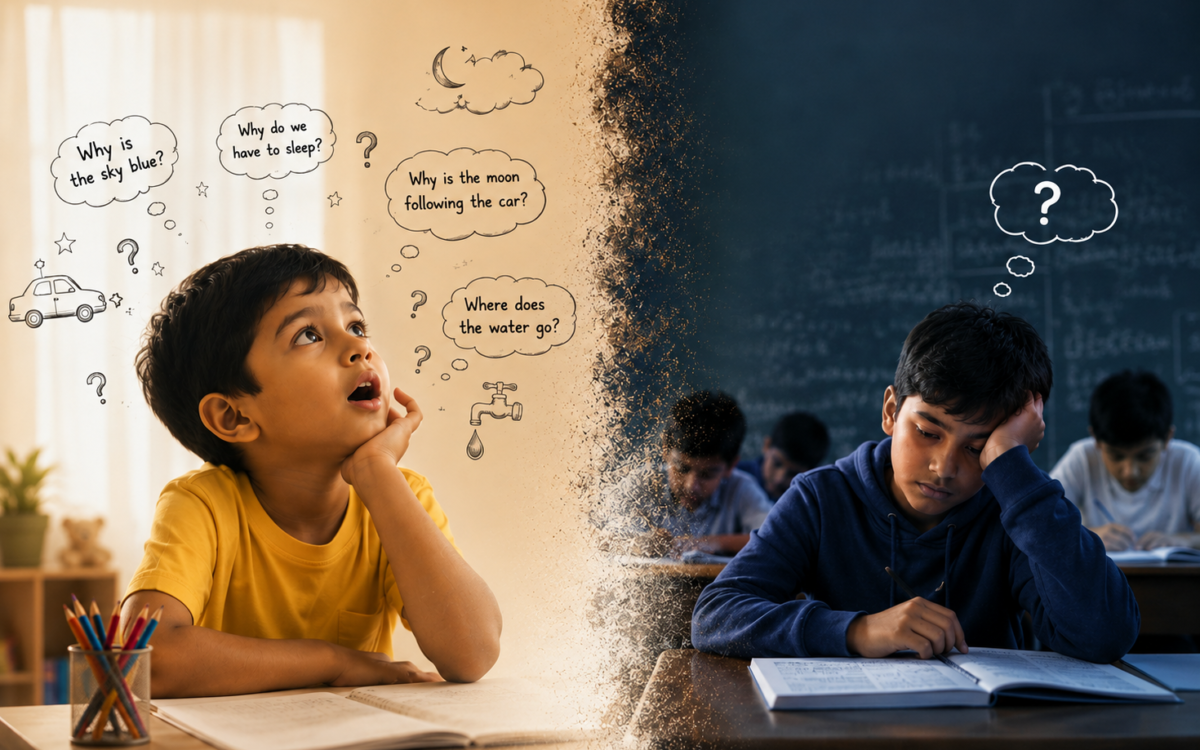
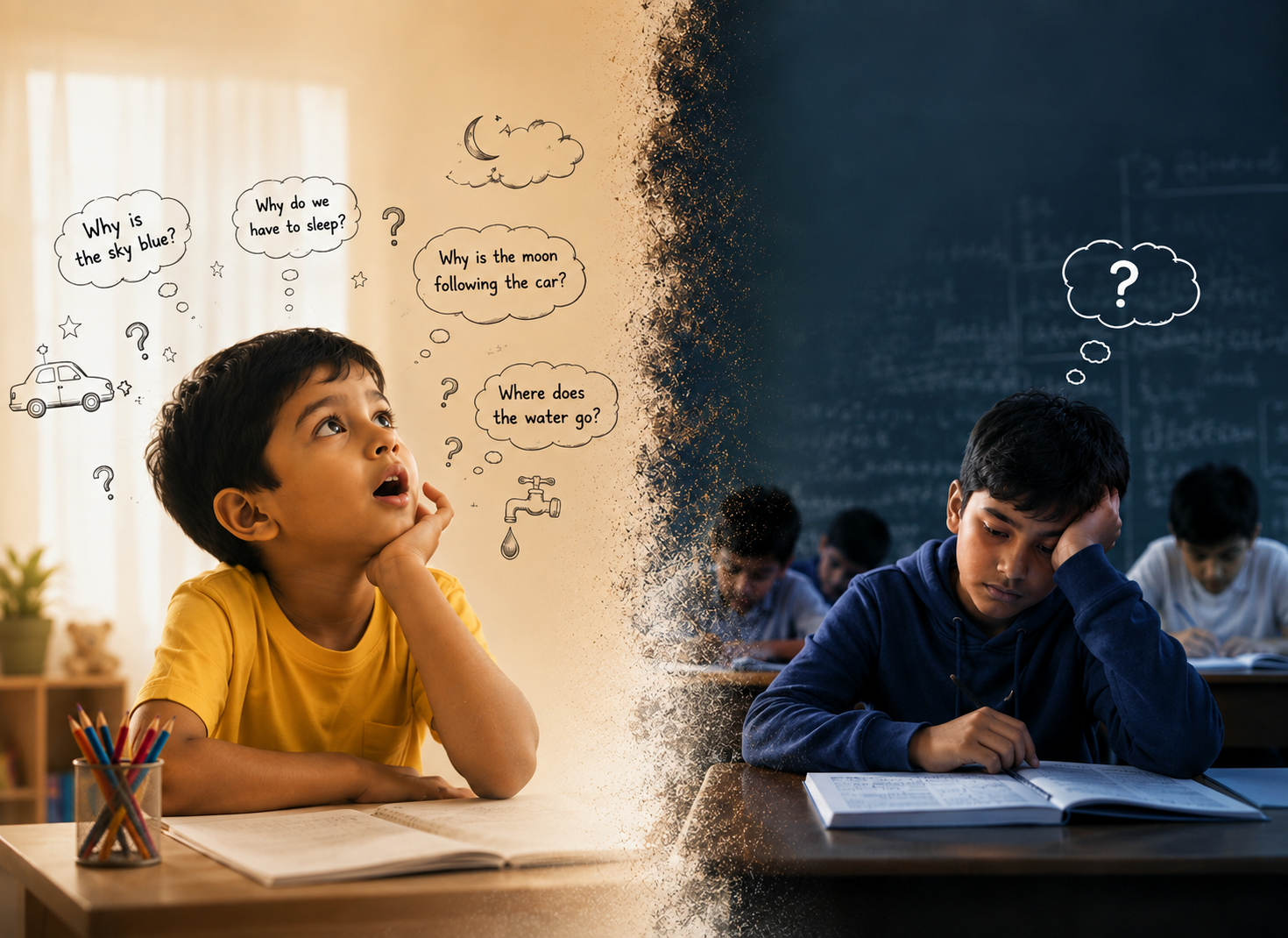
You’ve probably seen this happen. A child studies hard for a test, scores decent marks, and a week later can’t remember a thing about it. The effort was real. But was the learning?

That gap has a name. It has a lot to do with cognition, the mental processes that help children pay attention, understand, remember, think and use what they learn. And once you understand cognition, a lot of things about school and learning suddenly make sense.

What Is Cognition in Children?

Forget the big word for a second. Cognition simply refers to how the mind processes information and uses it. For a child, we can understand it through four everyday questions:

  • Can they pay attention to what’s in front of them?
  • Can they understand it, rather than simply hear or read it?
  • Can they remember it later?
  • And most importantly, Can they use what they learned in a different situation?
    That’s the difference.

Cognitive development isn’t only about what a child knows. It is about whether their mind can actually do something with what they know. And that makes cognitive skills an important part of a child’s overall learning and development.

Why Cognitive Skills Matter in the Classroom

Here’s the thing many of us were never told:
 Memorising is not the same as learning.

A child can memorise an answer the way a photocopier copies a page without deeply understanding what it means. The copy exists. But nothing has really connected. That’s one reason information learned purely through memorisation can disappear so quickly.

Real learning is different.

A child understands the idea, remembers enough of it to build upon later, and can apply that understanding when they encounter something new. That kind of learning requires several cognitive skills to work together:

ATTENTION. UNDERSTANDING. MEMORY. REASONING. APPLICATION.

Without them, a child may simply carry answers around long enough to put them on an exam paper. With them, knowledge starts becoming truly theirs.

Attention Is the Door to Learning

Here’s the first simple truth about how children learn: You can’t learn what you don’t notice. Attention is the door through which information enters. If a child is trying to learn while constantly distracted — by another screen, notifications, noise or something else competing for attention — it becomes harder to process the lesson properly. That’s why the quality of attention can matter just as much as the amount of time spent studying. Thirty focused minutes can sometimes be more productive than two distracted hours. Helping children develop attention and concentration, therefore, isn’t separate from learning. It is part of learning.

The Mind Can Only Handle So Much at Once


Here’s the second truth. Imagine a child’s working memory as a small desk. You can place a few things on the desk and work with them comfortably. But keep piling things onto it and eventually something falls off.

Learning can work in a similar way. When too much information is presented at once, a child may struggle to process it effectively. They can appear confused or overwhelmed even when they are perfectly capable of understanding the subject. Good learning respects this.

It captures attention, introduces information in manageable ways and gives the child opportunities to process, connect and use what they are learning.

The Mind Can Only Handle So Much at Once


Here’s the second truth. Imagine a child’s working memory as a small desk. You can place a few things on the desk and work with them comfortably. But keep piling things onto it and eventually something falls off.

Learning can work in a similar way. When too much information is presented at once, a child may struggle to process it effectively. They can appear confused or overwhelmed even when they are perfectly capable of understanding the subject. Good learning respects this.

It captures attention, introduces information in manageable ways and gives the child opportunities to process, connect and use what they are learning.

Be Brainy Blog 1 Image 1
Be Brainy Blog 1 Image 2

Memorisation vs Understanding: Why the Difference Matters

For a long time, being able to remember a large amount of information was strongly associated with being a good learner. But children are growing up in a very different world.

Facts are everywhere. A date, definition, formula or explanation can be found within seconds. And with AI-powered tools, even more complex answers can now be generated almost instantly. That doesn’t mean knowledge or memory no longer matters.

It means remembering information alone is no longer enough.

Children increasingly need to know what to do with information.

  • Can they question it?
  • Can they tell whether an answer makes sense?
  • Can they connect one idea with another?
  • Can they solve a problem they haven’t seen before?
  • Can they explain their reasoning?
  • Can they create something new from what they know?

These are the kinds of thinking and cognitive skills that become increasingly valuable when information itself is easy to access.

Be Brainy FAQ

Technology Can Give Children Answers. It Cannot Do Thinking for Them.


A device can retrieve information. AI can generate an explanation. A calculator can solve an equation. But children still need to develop the ability to understand, evaluate, question and apply what they receive. Technology cannot build those abilities on a child’s behalf.

That development happens through experience. through questioning, experimenting, making mistakes, trying again, solving problems and discovering connections.

And that is why critical thinking, problem-solving, creativity and cognitive development matter so much for today’s children. ₹The goal isn’t to compete with technology at remembering more information.

The goal is to develop minds that know how to think with information.

Leave A Comment

Recent Posts

Cart (0 items)